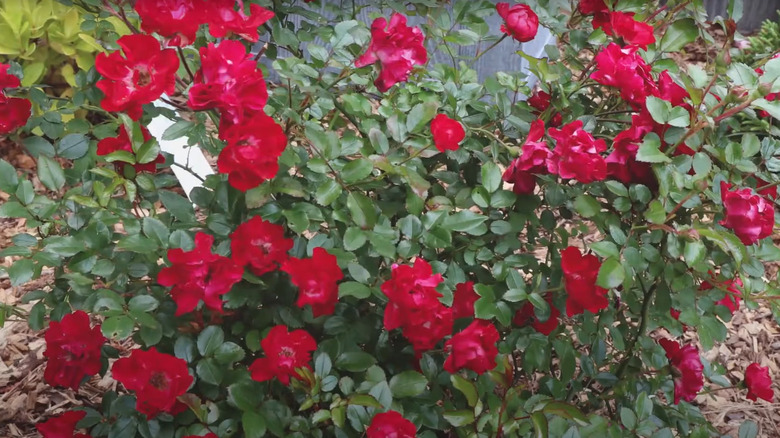
Ground covers certainly don’t have to be dull; however, if you’re seeking an option with added flair, consider this standout choice: “It’s a Breeze” rose (Rosa hybrid ‘Meigremlis’). This compact rose variety features abundant clusters of vibrant red blossoms along each stem. Growing approximately 2 to 3 feet tall and spreading up to 4 feet wide, it rapidly expands over large areas. Moreover, it offers continuous blooming throughout spring until autumn, providing rich crimson hues all season long as a striking visual element.
While groundcover roses aren’t novel, varieties like “It’s a Breeze” stand out due to their numerous benefits, making them particularly appealing for gardeners seeking both functionality and aesthetic appeal in one plant. These resilient bushes thrive within USDA Hardiness Zones 4 to 11, ensuring they’re suitable regardless of where you reside. Moreover, those living in milder climates have even more reason to include these attractive roses in their gardening repertoire. Evergreen plants that offer continuous coloring throughout the year as ground cover. Since they remain partially evergreen, these roses ensure you retain some greenery even during gentle winter months. The most encouraging aspect might be their notable resistance to diseases. However, this does not make them entirely impervious to pests; thus, if deer frequent your area, they could potentially feed on these plants.
Read more: 12 Reasons Why Adding a Bar of Soap to Your Garden Can Be Beneficial
Caring for Your It's A Breeze Rose
At the risk of coming across as cliché, taking care of "It's a Breeze" ought to indeed be simple. Initially, we strongly suggest familiarizing yourself with the ideas and strategies for cultivating ground cover roses Similar to many roses, this variety thrives best in sunny conditions with nutrient-rich, well-aerated soil. Therefore, should you possess dense, clay-heavy earth, incorporate organic matter upon planting "It's a Breeze" to guarantee it begins healthily. An additional advantage of this rose is its adaptability to various pH levels, eliminating significant concern over adjusting your soil’s acidity level.
This is a heat-resistant rose variety; however, during establishment, make certain to water it at minimum twice or thrice weekly—more frequently should temperatures rise significantly. Incorporate a slow-release fertilizer into your routine each spring so as to encourage continuous blooming from then until autumn. Prune these shrubs after they finish flowering for optimal outcomes. Towards the end of spring or beginning of winter, reduce their size by approximately thirty percent. Doing this promotes dense growth, potentially crucial when using roses for ground coverage purposes. Despite being low-maintenance and ideal for novices, enhancing your gardening skills becomes effortless with care like this. specialist advice for enhancing your rose garden soil .
Liked this article? Sign up for expert home tips, DIY guides, and design inspiration from our newsletter. House Digest newsletter !
Read the Original Article from House Digest .
Comments
Post a Comment